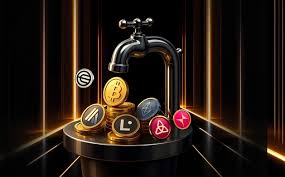
What is a Testnet Token and How Does it Differ from Real Money?
Imagine you’re building a new type of game. Before you let anyone play it, you create a special version for testing. This testing version lets you try out all the features without any real consequences.
That’s what a testnet token is like for blockchain technology.
A testnet is essentially a practice network. It’s a copy of the main blockchain where developers can test new features, applications, and transactions. These testnet tokens are created specifically for this practice environment.
They are designed to mimic real cryptocurrencies but have no actual monetary value.
Think of them like play money in a board game. You can use it to move around the board, buy properties, and learn the rules. But when the game is over, that play money is just paper.
You can’t take it to a store and buy groceries.
The main blockchain, often called the “mainnet,” is where real cryptocurrencies like Bitcoin or Ethereum are used. Transactions on the mainnet involve real money. People buy, sell, and trade these coins for actual value.
Testnet tokens are used to simulate these mainnet transactions. Developers can send them, receive them, and test smart contracts without risking any actual funds. This is crucial for building secure and reliable blockchain applications.
The core difference is the underlying network and its purpose. Testnets are for learning and building. Mainnets are for real-world use and value exchange.
My First “Big” Blockchain Project (and a Realization)
I remember when I first got deeply involved in blockchain development. It was a few years ago, and I was working on a decentralized application (dApp). My job was to integrate some new features that involved token transfers.
I was so focused on making the code work perfectly.
My mentor handed me a bunch of “test Ether.” It looked just like real Ether on the screen, with numbers in my wallet. I spent hours perfecting the transfer logic, simulating complex scenarios. At one point, I accidentally sent a large amount of test Ether to the wrong address.
My heart jumped into my throat for a second!
Then I remembered. It was just test Ether. No real money was lost.
That moment was a bit of a relief but also a big learning experience. It taught me the critical distinction between the simulated world of the testnet and the real, financial world of the mainnet. It’s easy to get caught up in the excitement of digital assets, but understanding their actual value (or lack thereof) is key.
Testnet vs. Mainnet: Key Differences
Purpose:
- Testnet: Practice, development, testing new features.
- Mainnet: Live network, real transactions, actual value.
Tokens:
- Testnet Tokens: No monetary value, used for simulation.
- Mainnet Tokens: Real cryptocurrencies with market value.
Risk:
- Testnet: Low risk, no financial loss.
- Mainnet: High risk, potential financial gain or loss.
Can Testnet Tokens Be Converted to Real Money?
This is the million-dollar question for many. The short answer is: generally, no, testnet tokens cannot be converted into real money.
Why? Because they are not designed to have any inherent value. They are created on a separate, isolated network.
This network doesn’t connect to the global financial system in the way that real cryptocurrencies do.
Think of it like this: if you print your own monopoly money, you can’t take it to Walmart and buy a TV. The store only accepts U.S. dollars.
Similarly, testnet tokens are only recognized within their specific testnet environment.
Exchanges and markets where you trade cryptocurrencies operate on the mainnet. They deal with assets that have been established on the live blockchain and have a verifiable market price. Testnet tokens lack this verifiable market value.
Sometimes, people get confused by faucets. Faucets are websites that give away small amounts of testnet tokens for free. They are used by developers to get tokens to test their applications.
Receiving tokens from a faucet is like getting free samples at a grocery store. It’s a way to try the product, but you can’t sell the samples back for money.
There are very rare and specific scenarios where a project might transition from a testnet to a mainnet. In such cases, they might conduct a token swap or airdrop. However, this is a planned event by the project team, not a general ability to convert any testnet token.
It’s essential to be wary of any platform or individual claiming they can convert testnet tokens to real money. This is almost always a scam. They might ask you to send them your testnet tokens or pay a fee, and you will likely lose whatever you send.
The Rationale Behind Testnets: Why They Exist
Understanding why testnets are crucial helps clarify why their tokens have no real-world value. Testnets serve a vital purpose in the blockchain ecosystem.
1. Development and Innovation: Developers need a safe space to build and experiment. They can try out new code, algorithms, and features without the risk of causing problems on the live network.
This fosters innovation in decentralized applications (dApps), smart contracts, and blockchain protocols.
2. Bug Detection and Security: Before launching a new feature or network upgrade, it’s tested extensively on a testnet. This allows developers to find and fix bugs, security vulnerabilities, and performance issues.
Imagine launching a new banking app without testing it first – that’s the kind of risk testnets prevent.
3. User Experience Testing: Developers can also test how users will interact with their dApps. They can get feedback on the interface, the transaction process, and the overall user experience.
This feedback loop is essential for creating user-friendly applications.
4. Cost-Effective Testing: Real cryptocurrencies can be expensive. Testing transactions on the mainnet would incur real gas fees.
Using testnet tokens eliminates these costs, making development and testing much more affordable.
5. Education and Learning: For newcomers to blockchain, testnets offer a way to learn how to use wallets, send transactions, and interact with dApps without financial risk. It’s a great way to get hands-on experience.
Because of these critical functions, testnets are intentionally isolated from the mainnet and the broader financial markets. Their tokens are purely functional within that sandbox environment.
Why Developers Love Testnets
- Safe Playground: No real money is at stake.
- Fast Iteration: Quickly test and refine new ideas.
- Cost Savings: Avoids expensive mainnet transaction fees.
- Bug Hunting: Finds and fixes issues before they impact real users.
- Skill Building: A great place for developers to learn and practice.
Potential for Future Value: Understanding “Airdrops” and Mainnet Launches
While testnet tokens themselves have no value, there’s a related concept that sometimes causes confusion: airdrops. Airdrops are when a new blockchain project distributes its newly launched cryptocurrency to early users or holders of other cryptocurrencies.
Sometimes, participation in a project’s testnet can be a way to qualify for a future airdrop. Project teams might reward users who tested their applications thoroughly, reported bugs, or provided valuable feedback.
Here’s how this might work:
- A project is developing a new blockchain.
- They run a testnet for several months.
- Users interact with the testnet, using testnet tokens to test features.
- When the project is ready to launch its mainnet, they may decide to reward these early testers.
- They could send a certain amount of their real mainnet tokens to the wallets of users who were active on the testnet.
In this scenario, the value comes not from the testnet tokens themselves, but from the new, real tokens that are distributed later. You are being rewarded for your effort and participation on the testnet.
It’s important to distinguish this from converting testnet tokens. You are not converting the play money. You are receiving new, real money as a reward for your work.
This is why it’s crucial to follow reputable blockchain projects and their official announcements. They will clearly outline any airdrop criteria and timelines. Be skeptical of any unofficial claims or promises of rewards for simply holding testnet tokens.
The launch of a mainnet is a significant event. For successful projects, the tokens launched on the mainnet can gain significant market value. Early involvement through testnets can sometimes offer a pathway to benefit from this, but it’s always a gamble and depends entirely on the project’s success.
My Experience with a Potential Airdrop
I was involved with a project that was building a new decentralized exchange (DEX). They had a public testnet running for months. I spent considerable time using it, trading pairs, providing liquidity, and reporting a few minor glitches I found.
The developers were very active on their community channels, thanking testers and explaining the progress. When they finally announced their mainnet launch, they also confirmed an airdrop for active testnet users. I received a small but valuable amount of their native token in my wallet.
It felt great because I had put in the time and effort. It wasn’t about trying to “get rich quick” from play money. It was a genuine reward for contributing to the project’s development.
This experience reinforced my understanding that the value lies in the real asset created, not the simulated one used for testing.
Airdrop Insights
- What it is: Free distribution of new crypto tokens.
- Why it happens: To reward early adopters, testers, or promote a project.
- Testnet connection: Sometimes, active testnet participation is a qualification criterion.
- Value: The value comes from the new real tokens, not the testnet tokens used for testing.
- Be Wary: Always get information from official project channels. Scammers often promise airdrops.
What to Watch Out For: Red Flags and Scams
The crypto space is unfortunately rife with scams. When it comes to testnet tokens, here are some major red flags to watch out for:
1. Promises of Conversion: If anyone or any website claims they can convert your testnet tokens into Bitcoin, Ethereum, or any other real currency, it’s a scam. Period.
There is no legitimate mechanism for this.
2. Requests for Fees or Private Keys: A common scam is asking you to pay a small fee to “unlock” your testnet tokens or to “verify” your wallet. They might also ask for your private keys or seed phrase, which would give them access to any real assets you might have in that wallet.
3. Unsolicited Offers: Be highly suspicious of unsolicited messages or emails about testnet tokens. Legitimate opportunities for rewards or airdrops are usually announced through official project channels that you’ve subscribed to or followed.
4. Websites Mimicking Official Platforms: Scammers create fake websites that look identical to real crypto exchanges or wallets. They’ll ask you to connect your wallet and approve transactions that drain your funds.
Always double-check the URL of any website you visit.
5. “Guaranteed” Returns: Any offer that guarantees a specific high return on your testnet tokens is fraudulent. The crypto market is volatile, and there are no guarantees.
Testnet tokens are worthless outside their network.
6. Unrealistic “Faucets”: While legitimate faucets give small amounts of test tokens, those promising huge quantities of any kind of token for minimal effort are likely scams. They might use this to gather personal information or bait you into a more significant scam.
The best defense is education and skepticism. If something sounds too good to be true, it almost certainly is, especially in the world of cryptocurrency. Always rely on official documentation and community channels for information about a project.
Remember: Testnet tokens are educational tools and development resources. They are not an investment vehicle, and attempting to trade them for real money will lead to disappointment or financial loss.
How to Get Testnet Tokens (Legitimately)
If you’re a developer or just want to learn about a specific blockchain by interacting with its testnet, here’s how you can get testnet tokens:
1. Official Testnet Faucets: Most major blockchain networks (like Ethereum, Polygon, Binance Smart Chain, Solana, etc.) have official “faucets.” These are websites provided by the network developers or community. You visit the faucet, often link your testnet wallet address, and they dispense a small amount of testnet tokens directly to your wallet.
- Example: For Ethereum’s Sepolia testnet, you would visit a Sepolia faucet website, paste your wallet address (e.g., 0x123.), and click a button.
2. Project-Specific Testnets: If you are testing a specific decentralized application (dApp), that dApp’s developers will likely run their own testnet. They will have instructions on how to obtain their project’s specific testnet tokens.
This might be through their own faucet or by bridging from a more established testnet.
3. Bridging Between Testnets: Sometimes, a project might use tokens from a well-known testnet (like Sepolia Ether) as a base and then create their own tokens on top of that for their specific dApp test. You might need to “bridge” tokens from one testnet to another.
4. Developer Tools: Integrated Development Environments (IDEs) and local blockchain simulators often come with pre-loaded testnet tokens or tools to generate them for your local testing environment.
Important Note: Always ensure you are on the correct testnet and using official faucets or documentation. Accidentally connecting to a fake faucet or using the wrong network can lead to issues, though typically not financial loss as long as you are using testnet tokens and not mainnet funds.
Legitimate Ways to Get Testnet Tokens
- Official Faucets: The primary way. Look for them on project websites.
- Project Documentation: Developers always explain how to get tokens for their specific testnet.
- Bridging Tools: Useful for moving test tokens between different test networks.
- Developer Software: Local environments often provide test tokens.
Real-World Context: Who Uses Testnets?
Testnets aren’t just for a few tech enthusiasts. They are fundamental to the growth and security of the entire blockchain industry.
1. Blockchain Developers: This is the most obvious group. They use testnets daily to build, debug, and refine new blockchain protocols, smart contracts, and decentralized applications (dApps).
They need to ensure their creations are robust before they go live.
2. dApp Builders: Whether it’s a decentralized finance (DeFi) platform, a blockchain game, or a non-fungible token (NFT) marketplace, the creators of these applications rely heavily on testnets. They test user interfaces, transaction flows, and game mechanics.
3. Security Auditors: Before a project launches its mainnet, security firms and individual auditors often test its code on a testnet. They look for vulnerabilities that could be exploited, protecting users and the project.
4. Enthusiasts and Learners: Many people in the crypto community use testnets to understand how different blockchains and dApps work without risking their own money. It’s a fantastic way to learn about the technology.
5. Businesses Exploring Blockchain: Companies looking to integrate blockchain technology into their operations might use testnets to experiment with proof-of-concept projects. This allows them to understand the potential and limitations before making a large investment.
For instance, a company developing a supply chain tracking solution using blockchain would deploy and test their smart contracts on a testnet. They’d simulate sending goods, updating records, and ensuring all parties could interact correctly. This happens long before any real goods or financial transactions are involved.
The existence and active use of testnets are indicators of a healthy and developing blockchain ecosystem. They are the unseen engine driving much of the innovation you see in the crypto space.
What This Means for You: Practical Takeaways
So, what should you remember about testnet tokens and their relation to real money?
1. Testnet Tokens are Play Money: Treat them as such. They are for learning, testing, and practicing.
Do not expect them to ever become valuable.
2. Value is on the Mainnet: Real value and potential for profit or loss exist only on the mainnet, with real cryptocurrencies and established blockchain protocols.
3. Be Wary of Scams: If anyone offers to convert your testnet tokens to real money, it’s a scam. Protect your private keys and never pay fees to “release” worthless tokens.
4. Testnets are for Building: Their primary purpose is to help developers build a better, more secure, and more innovative blockchain future.
5. Airdrops are Rewards, Not Conversions: Participating in testnets might qualify you for a future airdrop of new, real tokens from a project. This is a reward for effort, not a conversion of test tokens.
6. Education is Key: Use testnets to your advantage to learn. It’s the safest way to get hands-on experience with blockchain technology without financial risk.
Understanding these points will help you navigate the crypto world with more confidence and avoid common pitfalls. The excitement around digital assets is real, but so is the need for clarity and caution.
Frequent Questions About Testnet Tokens
Are testnet tokens the same as airdropped tokens?
No, they are very different. Testnet tokens are specifically for testing on a practice network and have no monetary value. Airdropped tokens, on the other hand, are typically real cryptocurrencies distributed by a project, often as a reward or for promotion, and they do have market value.
Can I lose money by using testnet tokens?
Generally, no. Since testnet tokens have no real value, you cannot lose real money by transacting with them. However, you could lose real money if you fall for a scam that asks you to send testnet tokens or pay fees related to them.
How do I know if I’m using a real testnet faucet?
Always access faucets through the official website of the blockchain network or the specific project you are testing. Double-check the URL. Legitimate faucets are usually linked directly from the project’s official documentation or community channels.
What is the difference between testnet and a beta version of an app?
A testnet is a practice version of a blockchain network itself, including its underlying technology and native tokens. A beta version of an app is a pre-release version of a specific application that runs on a network (which could be a testnet or even a mainnet). Testnets are more foundational.
Will testnet tokens ever be worth anything in the future?
In almost all cases, no. Testnet tokens are intentionally designed without value to prevent confusion with real assets. The value in blockchain innovation often comes from successful mainnet launches and projects that reward users for their contributions to testnets.
Can I trade testnet tokens on regular crypto exchanges?
No, you cannot trade testnet tokens on public cryptocurrency exchanges like Binance, Coinbase, or Kraken. These exchanges only list and trade assets that exist on live mainnets and have established market values. Testnet tokens are confined to their specific test networks.
What happens if I send real money to a testnet address?
If you accidentally send real cryptocurrency from your mainnet wallet to an address on a testnet, those funds are likely lost forever. Testnets are separate networks, and there is no way to bridge funds between a testnet and a mainnet by accident. Always ensure your wallet is connected to the correct network before sending transactions.
Conclusion: The Value of Practice
Understanding testnet tokens is key to appreciating the blockchain development process. They are the essential tools for innovation, security, and learning. While they hold no direct monetary value, the work done with them on testnets can lead to real rewards and contribute to the growth of valuable projects on the mainnet.